

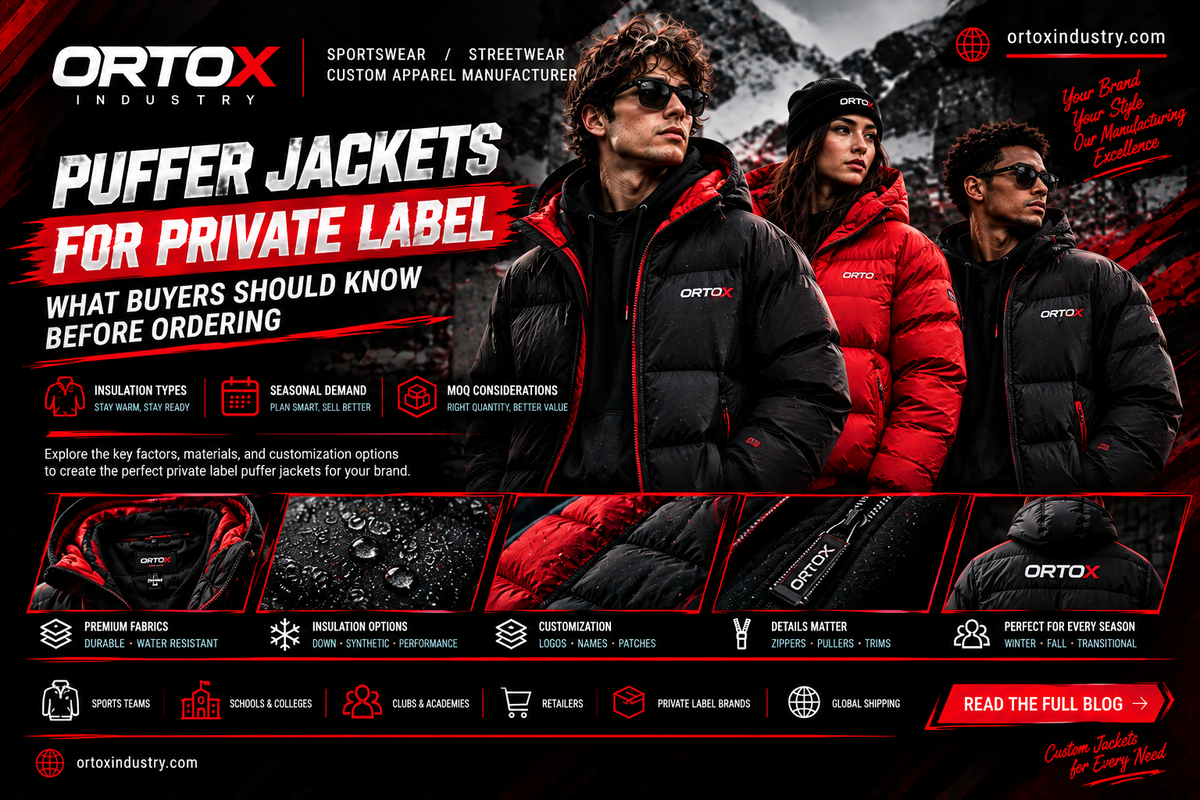
Puffer Jackets for Private Label: What Buyers Should Know Before Ordering
Primary Keyword: custom puffer jacket manufacturer
Secondary Keywords:
- custom puffer jacket manufacturer
- puffer jacket manufacturer
- custom puffer jackets
- private label puffer jackets
- private label puffer jacket manufacturer
- puffer jacket manufacturer Pakistan
- custom jacket manufacturer
- custom clothing manufacturer
- custom apparel manufacturer
- private label clothing manufacturer
- private label sportswear
- sportswear manufacturer
- custom sportswear manufacturer
- streetwear manufacturer
- custom streetwear manufacturer
- sportswear and streetwear
- OEM clothing manufacturer
- OEM apparel manufacturer
- wholesale puffer jackets
- custom winter jackets
- private label jackets
- custom outerwear manufacturer
- winter apparel manufacturer
- insulated jackets manufacturer
- custom padded jackets
- quilted puffer jackets
- lightweight puffer jackets
- heavyweight puffer jackets
- fashion puffer jackets
- streetwear puffer jackets
- custom outerwear
- wholesale jackets
Suggested SEO Title:
Puffer Jackets for Private Label: What Buyers Should Know Before Ordering
Suggested Meta Description:
Learn how to choose a custom puffer jacket manufacturer, compare insulation options, understand seasonal demand, plan MOQ, customize branding, and develop private label puffer jackets.
Suggested URL:https://ortoxindustry.com/puffer-jackets-private-label/
Introduction: Why Puffer Jackets Matter for Private Label Brands
Puffer jackets have become an important category within modern outerwear.
They can be designed for cold-weather functionality, everyday casualwear, outdoor activities, travel, fashion collections, streetwear and lifestyle apparel. Because of this versatility, puffer jackets can fit naturally into several different clothing categories.
For a private-label brand, however, ordering puffer jackets is more complicated than simply choosing a color and adding a logo.
Buyers need to consider:
- Insulation
- Outer fabric
- Lining
- Fabric weight
- Jacket construction
- Quilting
- Fit
- Seasonal demand
- Branding
- Hardware
- Packaging
- MOQ
- Sampling
- Quality control
- Production timeline
- Shipping
The decisions made during product development can influence the final appearance, comfort, warmth, durability and market positioning of the jacket.
This is particularly important for brands operating in sportswear and streetwear, where outerwear can be both functional and fashion-focused.
Ortox Industry currently describes its manufacturing operation as specializing in streetwear, fashion wear, fitness apparel and athletic clothing for wholesalers, distributors, retailers and private-label brands, with OEM and custom manufacturing capabilities. (Ortox Industry)
That makes puffer jackets a useful product category to discuss as part of a broader private-label outerwear and apparel strategy.
1. What Is a Puffer Jacket?
A puffer jacket is an insulated outerwear garment typically constructed with an outer shell, insulation and lining.
The insulation is often divided into sections using quilting or similar construction.
These sections help distribute the insulation throughout the jacket.
Depending on the design, a puffer jacket can be:
- Lightweight
- Midweight
- Heavyweight
- Short
- Long
- Oversized
- Regular fit
- Cropped
- Hooded
- Hoodless
- Fashion-focused
- Outdoor-oriented
- Streetwear-inspired
The same basic construction can therefore be adapted to different markets.
A private-label streetwear brand may want an oversized black puffer with bold branding.
An outdoor-inspired brand may require a lightweight insulated jacket.
A fashion label may focus more heavily on silhouette, fabric finish, hardware and branding.
This is why selecting the right custom puffer jacket manufacturer requires more than simply finding someone who can sew jackets.
2. Why Puffer Jackets Are Popular in Streetwear
Outerwear has an important role in streetwear because jackets can significantly influence the overall silhouette of an outfit.
A puffer jacket can create:
- Volume
- Structure
- Layering
- Contrast
- Visual impact
It can be worn over:
- Hoodies
- Sweatshirts
- T-shirts
- Tracksuits
- Sweatpants
- Cargo pants
- Jeans
This makes the puffer jacket naturally compatible with modern streetwear.
A black oversized puffer, for example, can become a core winter product for a streetwear collection.
A brand can then build additional products around the same aesthetic.
For example:
Winter Streetwear Collection
- Oversized puffer jacket
- Heavyweight hoodie
- Sweatpants
- Cargo pants
- Long-sleeve T-shirt
- Beanie
This creates a complete seasonal collection rather than a single isolated product.
3. Puffer Jackets and the Sportswear + Streetwear Connection
Modern clothing categories increasingly overlap.
A garment originally associated with outdoor or cold-weather use can become part of everyday fashion.
This is particularly visible in the relationship between:
Sportswear + Streetwear + Lifestyle Fashion
Ortox Industry’s existing editorial content discusses this broader crossover between sportswear, streetwear and athletic fashion, emphasizing products that combine comfort, performance and everyday styling. (Ortox Industry)
Puffer jackets can fit into this intersection because they can be designed with both functionality and fashion in mind.
For example, a sportswear-inspired puffer may emphasize:
- Lightweight construction
- Mobility
- Weather protection
- Practical pockets
A streetwear puffer may emphasize:
- Oversized fit
- Bold colors
- Heavy volume
- Large branding
- Fashion-oriented details
A private-label manufacturer needs to understand which direction the buyer wants to take.
4. Why Buyers Should Plan Before Ordering
One of the biggest mistakes a new apparel brand can make is contacting a manufacturer without a clear product concept.
Before requesting production, the buyer should determine:
Product Type
What kind of puffer jacket are you developing?
Target Market
Who will buy it?
Season
Will it be sold for winter, transitional weather or a specific climate?
Fit
Should it be regular, relaxed or oversized?
Insulation
What level of warmth is required?
Fabric
What outer and inner materials are appropriate?
Branding
Where should the logo and labels appear?
Quantity
What is the expected order volume?
Price Position
Is the product intended to be entry-level, mid-range or premium?
Answering these questions before production can make communication with a manufacturer much clearer.
5. Insulation Is One of the Most Important Decisions
When developing a puffer jacket, insulation is one of the most important product decisions.
The insulation affects:
- Warmth
- Weight
- Bulk
- Compressibility
- Cost
- Appearance
- Intended use
There are several approaches to insulation, and the appropriate option depends on the product’s target market.
Common categories include:
- Synthetic insulation
- Down insulation
- Down alternatives
- Polyester-based fills
Each option has different characteristics.
For private-label brands, the manufacturer should discuss the appropriate insulation according to the jacket’s intended application.
6. Synthetic Insulation
Synthetic insulation is commonly used in insulated apparel.
Synthetic fills can be manufactured from various fibers and can be engineered for different levels of warmth and loft.
Potential advantages can include:
- Consistent manufacturing
- Availability in different weights
- Practical care requirements
- Suitability for different jacket designs
Synthetic insulation can be especially relevant for commercial outerwear collections where brands want consistent product specifications.
However, the actual performance depends on the specific insulation material and construction.
Therefore, buyers should ask for material specifications rather than simply requesting “warm filling.”
7. Down Insulation
Down insulation is another established option for insulated outerwear.
It can provide a high warmth-to-weight ratio, depending on the down quality and garment construction.
However, brands considering down need to pay attention to:
- Fill composition
- Fill power
- Fill weight
- Sourcing
- Certification requirements
- Care instructions
For a private-label brand, sourcing and documentation can be especially important depending on the target market.
If a brand does not specifically require natural down, synthetic insulation may be a simpler option for some product programs.
8. Down-Alternative Puffer Jackets
Down-alternative insulation can be used when a brand wants the visual and functional concept of a puffer without natural down.
These jackets can be developed with synthetic filling designed to provide loft and warmth.
For fashion brands, the decision may depend on:
- Price
- Desired bulk
- Target customer
- Product positioning
- Care requirements
- Material preferences
The important point is that insulation should be selected based on the intended product rather than using the same filling for every jacket.
9. Lightweight Puffer Jackets
Not every puffer jacket needs to be extremely thick.
Lightweight puffers can be useful for:
- Transitional seasons
- Mild winter conditions
- Travel
- Layering
- Everyday casualwear
- Fashion collections
A lightweight puffer can be worn over a hoodie or sweatshirt without creating excessive bulk.
This can make it particularly useful for streetwear brands.
For example:
Lightweight Puffer + Oversized Hoodie + Joggers
creates a complete casual winter outfit.
10. Heavyweight Puffer Jackets
Heavyweight puffers are designed around a more substantial silhouette.
They may use:
- More insulation
- Larger quilting sections
- Heavier outer fabrics
- More structured construction
These jackets can create a strong visual presence.
For streetwear brands, a heavyweight oversized puffer can become a statement piece.
For cold-weather markets, heavier insulation may also provide greater warmth.
The exact performance depends on the insulation, fabric, construction and environmental conditions.
11. Puffer Jacket Shell Fabrics
The outer shell is another important part of the jacket.
Common material categories may include:
- Polyester
- Nylon
- Recycled polyester
- Technical woven fabrics
- Blended materials
The appropriate fabric depends on the product’s intended characteristics.
Buyers should consider:
- Weight
- Durability
- Surface appearance
- Water resistance
- Wind resistance
- Hand feel
- Color
- Printing compatibility
A fashion puffer and a performance-oriented puffer may require very different shell materials.
12. Nylon vs Polyester for Puffer Jackets
Nylon and polyester are both commonly used in outerwear.
The best choice depends on the desired product characteristics.
Nylon
Can offer:
- Lightweight construction
- Smooth appearance
- Strong fabric characteristics
- Technical outerwear feel
Polyester
Can offer:
- Versatility
- Consistent coloration
- Broad fabric availability
- Different finishing possibilities
The specific fabric construction matters more than simply choosing one fiber name.
Brands should evaluate actual samples and fabric specifications before approving production.
13. Lining Selection
The inside of a puffer jacket should not be overlooked.
The lining affects:
- Comfort
- Ease of layering
- Internal appearance
- Hand feel
- Construction
A smooth lining can help the jacket slide comfortably over sweatshirts and hoodies.
For a private-label brand, the lining can also provide another opportunity for branding or custom color selection.
14. Quilting and Baffle Design
The visual identity of a puffer jacket is strongly influenced by its quilting pattern.
Common styles include:
- Horizontal quilting
- Vertical quilting
- Diamond quilting
- Box quilting
- Narrow channels
- Large baffles
- Irregular fashion quilting
Different patterns create different visual impressions.
Large horizontal sections can create a bold oversized appearance.
Smaller sections may create a more structured look.
A fashion brand may even use unusual quilting patterns as part of its design identity.
15. Why Baffle Size Matters
The size of the quilted sections can influence the jacket’s appearance and insulation distribution.
Large baffles can create a more dramatic puffer appearance.
Smaller channels can provide a more controlled and compact silhouette.
The construction should also account for the selected insulation.
The manufacturer needs to ensure that the quilting and filling work together appropriately.
16. Puffer Jacket Fit
Fit is critical for private-label outerwear.
Possible fits include:
Regular Fit
A traditional silhouette suitable for general everyday use.
Relaxed Fit
Provides additional room for layering.
Oversized Fit
Creates a more fashion-oriented streetwear silhouette.
Cropped Fit
Can create a contemporary fashion appearance.
Longline Fit
Provides additional body coverage and a different winter silhouette.
The fit should be defined through actual measurements.
Terms such as “oversized” can mean different things to different brands.
17. Why Measurements Matter
A tech pack or measurement chart can help communicate the desired fit.
Measurements may include:
- Chest
- Shoulder
- Body length
- Sleeve length
- Armhole
- Cuff
- Hem
- Collar
- Hood
For an oversized puffer, chest width and shoulder measurements can dramatically affect the final appearance.
Therefore, buyers should approve a sample before bulk manufacturing.
18. Hooded vs Hoodless Puffer Jackets
Both styles can work depending on the collection.
Hooded Puffer
Can provide:
- Additional coverage
- More casual styling
- Strong streetwear appeal
- Layering options
Hoodless Puffer
Can provide:
- Cleaner silhouette
- Easier layering
- More minimalist appearance
- Greater versatility with scarves and hoodies
A brand can also develop both versions as separate products.
19. Collar Design
The collar contributes to both appearance and functionality.
Options can include:
- Stand collar
- High collar
- Ribbed collar
- Padded collar
- Low-profile collar
For a minimalist streetwear puffer, a clean high collar can work well.
For a performance jacket, the collar may be designed with additional protection.
20. Zippers and Hardware
Hardware is often overlooked during early product development.
However, details such as zippers and pullers can influence the final appearance significantly.
Potential considerations include:
- Main zipper
- Pocket zippers
- Zipper color
- Puller shape
- Hardware finish
- Custom zipper pullers
For premium private-label outerwear, custom hardware can contribute to the overall brand identity.
21. Pocket Design
Pockets are both functional and visual features.
Possible options include:
- Side-entry pockets
- Welt pockets
- Zipper pockets
- Chest pockets
- Internal pockets
- Large utility pockets
Streetwear brands may prefer larger pockets for visual impact.
Outdoor-focused products may emphasize secure pockets.
The pocket design should match the intended use.
22. Cuffs and Hem Construction
Cuffs can be:
- Elasticated
- Adjustable
- Snap-based
- Hook-and-loop
- Simple sleeve hems
The hem can also include:
- Elastic
- Drawcord
- Adjustable toggles
- Straight construction
These details influence how the jacket sits on the body.
For an oversized streetwear puffer, a carefully designed hem can help maintain the desired silhouette.
23. Custom Branding for Private Label Puffer Jackets
Private-label puffer jackets can carry branding in several locations.
Possible areas include:
- Chest
- Sleeve
- Back
- Hood
- Zipper puller
- Inner lining
- Neck
- Hang tag
Branding methods can include:
Embroidery
Useful for premium logos and smaller marks.
Screen Printing
Can work for certain applications and fabrics.
Heat Transfer
Can be used for detailed artwork depending on the material.
Woven Labels
Useful for subtle branding.
Patches
Can create a more prominent streetwear appearance.
The decoration method should be selected based on the fabric and design.
24. Minimalist Branding vs Statement Branding
Not every brand needs a huge logo.
Minimalist Approach
- Small chest logo
- Tonal embroidery
- Small sleeve branding
- Minimal labels
This can create a clean premium appearance.
Statement Approach
- Large back graphic
- Oversized chest logo
- Multiple patches
- Contrast embroidery
- Graphic sleeves
This can suit certain streetwear collections.
The right choice depends on the brand identity.
25. Custom Colors for Puffer Jackets
Color selection is an important part of product development.
Classic colors include:
- Black
- Navy
- Grey
- White
- Olive
Fashion collections may include:
- Red
- Brown
- Cream
- Orange
- Blue
- Green
- Burgundy
Brands can also use contrast combinations.
For example:
Black shell + red branding
or
Cream shell + tonal beige branding
The color should work with the rest of the collection.
26. Black Puffer Jackets for Streetwear
Black remains a particularly versatile choice for streetwear.
It can be combined with:
- Black hoodies
- Grey sweatpants
- White sneakers
- Cargo trousers
- Graphic T-shirts
A black puffer can also function as a core product that remains relevant across multiple seasons.
For a new brand, a neutral outerwear color can be easier to integrate into different collections.
27. Seasonal Demand and Puffer Jackets
Seasonality is one of the most important factors buyers should consider before ordering.
Puffer jackets are generally associated with cooler weather, which means production and marketing need to be planned in advance.
A brand should consider:
- Target market climate
- Selling season
- Production timeline
- Sampling
- Shipping
- Inventory arrival
- Marketing campaign
- Launch date
The key is to avoid treating winter products like last-minute purchases.
28. Why Seasonal Planning Matters
Imagine a brand wants to launch a winter puffer collection in October.
If product development begins too late, the brand may have to deal with:
- Delayed sampling
- Material sourcing delays
- Production delays
- Shipping delays
- Missed marketing dates
Instead, brands can plan their winter collections months in advance.
A typical planning cycle might involve:
Concept → Sample → Revision → Approval → Production → Quality Control → Shipping → Launch
The exact timeline varies by manufacturer and product.
29. Planning for Different Climate Markets
Not every winter market has the same requirements.
A jacket designed for a mild winter may be inappropriate for a very cold environment.
Likewise, a very heavily insulated jacket may be uncomfortable in a moderate climate.
Therefore, the buyer should tell the manufacturer:
- Target country
- Expected temperature range
- Intended use
- Layering expectations
- Customer profile
This allows the product to be developed around actual use rather than assumptions.
30. MOQ for Custom Puffer Jackets
MOQ means Minimum Order Quantity.
It is one of the first commercial questions buyers should ask a manufacturer.
However, MOQ is not always simply one number.
It can depend on:
- Product type
- Fabric
- Color
- Insulation
- Custom trims
- Branding
- Packaging
- Production complexity
For example, a highly customized puffer jacket may require different production conditions from a simpler jacket.
Therefore, buyers should ask:
What is the MOQ for my specific puffer jacket design?
rather than relying on a generic MOQ figure.
31. Why MOQ Matters for Startups
A new private-label brand may not know exactly how many jackets it can sell.
Ordering too much inventory can create financial pressure.
A smaller initial order can allow a brand to test:
- Product demand
- Color preferences
- Fit
- Price
- Customer response
If the product performs well, the brand can plan larger future production runs.
However, the economics of smaller production quantities can differ from larger orders.
Therefore, brands should discuss MOQ and pricing together.
32. MOQ and Multiple Colors
Suppose a brand wants:
- Black
- Red
- Cream
- Olive
The manufacturer may have different MOQ requirements for each color depending on fabric sourcing and production arrangements.
This is why buyers should clarify whether MOQ applies:
- Per design
- Per color
- Per size
- Per order
The exact arrangement should be confirmed before production.
33. MOQ and Custom Fabric
Custom fabrics can introduce additional considerations.
If a brand wants a very specific fabric color or finish, the supplier may require a certain volume.
For smaller brands, using an available fabric option may sometimes make production simpler.
For established brands, custom fabric development may be more practical.
The decision should be based on:
- Quantity
- Budget
- Product uniqueness
- Timeline
- Long-term production plans
34. Sampling Before Bulk Ordering
Sampling is one of the most important steps when ordering custom puffer jackets.
A physical sample can help the buyer evaluate:
- Fit
- Insulation
- Bulk
- Fabric
- Color
- Quilting
- Zippers
- Pockets
- Branding
- Overall appearance
A design that looks correct digitally may feel very different when physically constructed.
This is especially true for padded garments.
35. What to Check on a Puffer Jacket Sample
When the sample arrives, inspect it carefully.
Fit
Does it match the approved measurements?
Insulation
Does the jacket have the desired level of bulk?
Quilting
Are the sections even?
Stitching
Are seams clean and secure?
Zippers
Do they operate smoothly?
Pockets
Are they correctly positioned?
Branding
Is the logo correctly sized and positioned?
Color
Does the fabric match the approved reference?
Lining
Does the interior feel appropriate?
Overall Appearance
Does the garment look like the product you intended to create?
36. Why Sample Revisions Are Normal
A first sample does not always need to be perfect.
Product development often involves adjustments.
For example, a brand may decide:
- Increase body width
- Reduce sleeve length
- Change quilting size
- Increase insulation
- Reduce insulation
- Change pocket position
- Adjust hood size
- Change zipper
- Modify branding
These changes can be communicated before bulk production.
This is one reason sampling is so valuable.
37. Quality Control for Puffer Jackets
Quality control is especially important for padded outerwear.
Potential inspection areas include:
- Fabric
- Insulation
- Quilting
- Stitching
- Measurements
- Zippers
- Pockets
- Labels
- Branding
- Color
- Finishing
Ortox Industry’s current website states that its production process includes quality inspection covering areas such as durability, finishing, stitching and overall appearance. (Ortox Industry)
For a buyer, the important point is to establish clear quality expectations before bulk production.
38. Puffer Jacket Stitching
Puffer jackets contain multiple construction areas.
Important stitching zones include:
- Quilted sections
- Side seams
- Shoulders
- Armholes
- Sleeves
- Pockets
- Zipper areas
- Collar
- Hood
- Hem
Poor construction can affect both appearance and durability.
For this reason, experienced manufacturing and quality-control processes are important.
39. Insulation Distribution
A puffer jacket should be constructed so that insulation is appropriately distributed across the intended areas.
The quilting pattern helps manage the fill.
Uneven insulation can affect:
- Appearance
- Warmth
- Bulk
- Comfort
A sample inspection can help identify obvious construction problems before bulk production.
40. Packaging for Private Label Puffer Jackets
Packaging should be planned as part of the product.
Depending on the brand, packaging can include:
- Poly bags
- Branded bags
- Hang tags
- Size stickers
- Care labels
- Woven labels
- Cartons
Puffer jackets may also need appropriate packing methods depending on their construction and filling.
The brand should discuss packaging requirements with the manufacturer before production.
41. Private Label Labels
A private-label puffer jacket can include several types of labels.
Neck Label
Displays the brand identity and size information.
Care Label
Provides care-related information.
Side Label
Can contain branding or product information.
Woven Label
Can provide a premium branded appearance.
Hang Tag
Can communicate:
- Brand story
- Product information
- Size
- Pricing
- Collection details
Label design should remain consistent across the brand’s product line.
42. Building a Puffer Jacket Collection
Instead of producing one jacket, brands can create a complete outerwear range.
For example:
Product 1
Lightweight Puffer
Product 2
Oversized Streetwear Puffer
Product 3
Hooded Winter Puffer
Product 4
Cropped Fashion Puffer
Product 5
Longline Puffer
This gives the brand multiple products for different customers and seasons.
43. Puffer Jackets With Hoodies
The relationship between puffer jackets and hoodies is particularly useful for streetwear.
A brand can style:
Puffer + Hoodie + Sweatpants
This creates a complete winter streetwear outfit.
It also creates cross-selling opportunities.
Customers purchasing the jacket may also purchase the hoodie or matching sweatpants.
44. Puffer Jackets With Tracksuits
Tracksuits and puffer jackets can also be combined.
For example:
Puffer Jacket + Tracksuit + Sneakers
This styling approach connects sportswear and streetwear.
It can work particularly well for brands positioned around athletic lifestyle clothing.
45. Puffer Jackets for Sportswear Brands
Although puffer jackets are generally associated with winter lifestyle wear, sportswear brands can incorporate them into broader collections.
Possible uses include:
- Travel
- Outdoor training
- Team travel
- Lifestyle wear
- Warm-up
- Casual winter apparel
A sportswear brand can use matching colors and branding across:
- Performance shirts
- Tracksuits
- Warm-up jackets
- Puffer jackets
- Hoodies
This creates a consistent product family.
46. Puffer Jackets for Streetwear Brands
Streetwear brands can approach puffers from a fashion-first perspective.
Potential design elements include:
- Oversized fit
- Bold quilting
- Contrast colors
- Large logos
- Patches
- Custom hardware
- Cropped proportions
- High collars
The goal is to create a jacket that functions as part of the brand’s overall visual language.
47. Puffer Jackets for Private Label Fashion Brands
Fashion brands can use puffers as seasonal statement pieces.
They may focus on:
- Fabric finish
- Silhouette
- Branding
- Color
- Hardware
- Quilting
A premium-looking puffer does not necessarily need excessive branding.
In some collections, the fabric, fit and construction create the product identity.
48. Wholesale Puffer Jackets
Wholesale buyers may be looking for ready-to-sell or customized outerwear.
Potential customers include:
- Clothing retailers
- Fashion boutiques
- Ecommerce businesses
- Sportswear stores
- Streetwear retailers
- Distributors
- Private-label brands
Wholesale buyers should clarify:
- Quantity
- Sizes
- Colors
- Branding
- Packaging
- Delivery requirements
This helps the manufacturer understand the commercial requirements.
49. Custom Puffer Jackets for Ecommerce Brands
Ecommerce brands need products that photograph well.
Puffer jackets have strong visual characteristics that can be highlighted through photography.
Brands should consider:
- Front view
- Back view
- Side profile
- Close-up details
- Quilting
- Logo
- Hardware
- Fabric texture
- Hood
- Pockets
Good product photography can communicate product details before customers physically receive the garment.
50. Puffer Jackets and Product Photography
For a streetwear brand, photography can emphasize:
- Oversized silhouette
- Layering
- Urban environments
- Logo placement
- Color
- Styling
For an outdoor-oriented brand, photography may emphasize:
- Weather
- Movement
- Landscape
- Functional details
- Layering
The product should be photographed according to the intended market positioning.
51. Choosing a Custom Puffer Jacket Manufacturer
Selecting the right manufacturing partner requires more than comparing prices.
Buyers should evaluate:
Product Experience
Does the manufacturer understand insulated jackets?
Customization
Can the manufacturer work with your design?
Sampling
Can you approve a sample before bulk production?
Materials
Can they provide suitable outer fabrics, linings and insulation?
Branding
Can they add your labels and branding?
Quality Control
How is the finished product inspected?
MOQ
Does the MOQ fit your business?
Communication
Can the manufacturer clearly discuss your requirements?
Production
Can they handle your expected order volume?
Shipping
Can they support international export?
52. Why Product-Specific Manufacturing Experience Matters
A manufacturer may be experienced in T-shirts but not necessarily in insulated jackets.
Puffer jackets require different construction considerations.
They involve:
- Quilting
- Filling
- Lining
- Outer shell
- Zippers
- Insulation distribution
- Specialized construction
Therefore, buyers should discuss the exact product category with the manufacturer.
The goal is to ensure that the factory understands what the product requires.
53. Working With a Manufacturer From Pakistan
Pakistan has a large apparel manufacturing sector, and Sialkot is known as an important industrial center with manufacturing expertise across several product categories.
Ortox Industry identifies its operation in Sialkot, Punjab, Pakistan, and describes its services as custom manufacturing and export support for international brands and wholesale buyers. (Ortox Industry)
For an international buyer, the key considerations remain:
- Product quality
- Communication
- Sampling
- Manufacturing capabilities
- MOQ
- Documentation
- Packaging
- Shipping
Location is only one part of evaluating a manufacturing relationship.
54. Direct Communication With the Factory
Direct communication can be useful for custom products because there are many specifications to discuss.
A buyer may need to explain:
- Fabric
- Insulation
- Measurements
- Quilting
- Colors
- Hardware
- Branding
- Packaging
Ortox Industry’s existing content also emphasizes direct factory communication and the role of direct manufacturing relationships for sportswear, streetwear and private-label buyers. (Ortox Industry)
The important thing is to make sure all product specifications are clearly documented.
55. The Role of a Tech Pack
A tech pack can be extremely useful for custom puffer jackets.
It can contain:
- Technical drawings
- Measurements
- Fabric details
- Insulation information
- Color references
- Stitching details
- Zipper specifications
- Pocket specifications
- Label placement
- Logo placement
- Packaging instructions
A good tech pack reduces ambiguity.
However, brands without a complete tech pack can discuss their product concept with a manufacturer to determine what information is needed for development.
56. What to Send a Puffer Jacket Manufacturer
When requesting a quote or sample, prepare:
Product Information
- Jacket type
- Intended use
- Target season
- Target market
Design
- Sketch
- Reference image
- Tech pack
Materials
- Outer fabric
- Lining
- Insulation
- Hardware
Branding
- Logo
- Artwork
- Labels
- Patches
Quantity
- Estimated order
- Color breakdown
- Size breakdown
Packaging
- Label requirements
- Hang tags
- Packaging
This makes the initial conversation more efficient.
57. Cost Factors in Puffer Jacket Manufacturing
The final cost of a puffer jacket can depend on many variables.
These may include:
- Outer fabric
- Lining
- Insulation
- Jacket weight
- Construction complexity
- Quilting
- Zippers
- Hardware
- Pockets
- Branding
- Labels
- Packaging
- Order quantity
A simple lightweight jacket and a heavily insulated premium jacket should not be expected to have the same manufacturing cost.
Therefore, buyers should compare quotations based on specifications rather than price alone.
58. Why Cheap Quotes Need Careful Evaluation
A very low quotation may look attractive, but buyers should ask what is included.
Questions can include:
- What fabric is being used?
- What insulation is included?
- Is the lining included?
- Are labels included?
- Is branding included?
- Is packaging included?
- Is sampling included?
- What quality standard is being followed?
Two manufacturers can quote different prices because they are quoting different products.
The correct comparison is:
Same specifications + Same quantity + Same branding + Same quality requirements
59. Production Timeline
Puffer jackets generally require more product development than simpler garments.
The process may involve:
- Design
- Material selection
- Pattern development
- Sample
- Fit review
- Revision
- Approval
- Bulk production
- Quality control
- Packing
- Shipping
The exact timeline varies by manufacturer, season, order size and material availability.
Brands should therefore discuss the expected production schedule before confirming a launch date.
60. Why Early Ordering Helps Seasonal Brands
Because puffers are seasonal products, late production can create problems.
A brand should ideally allow enough time for:
- Design development
- Sampling
- Revisions
- Material sourcing
- Production
- Quality inspection
- Shipping
- Marketing
Launching winter products after the season has already started can reduce the time available for selling them.
Seasonal apparel therefore requires forward planning.
61. Building a Winter Streetwear Collection
A puffer jacket can serve as the centerpiece of a winter streetwear collection.
For example:
Outerwear
- Oversized puffer
- Varsity jacket
Mid Layers
- Heavyweight hoodie
- Sweatshirt
Bottoms
- Heavyweight sweatpants
- Cargo pants
Accessories
- Beanie
- Cap
The same branding system can run throughout the entire collection.
62. Building a Sportswear Winter Collection
A sportswear brand can use a similar structure.
Performance
- Performance shirt
- Training pants
Warm-Up
- Warm-up jacket
- Tracksuit
Winter Outerwear
- Puffer jacket
Lifestyle
- Hoodie
- Sweatpants
This gives the brand products for different moments within the customer’s routine.
63. Puffer Jackets and Private Label Branding
Private-label production is especially useful when the brand wants complete ownership of the customer-facing identity.
A private-label puffer can carry:
- Brand label
- Custom logo
- Custom colors
- Custom patches
- Custom packaging
- Brand-specific product names
The manufacturer handles production while the brand presents the finished product as part of its own collection.
Ortox Industry currently describes its OEM and private-label services as allowing brands to use their own branding, labels, packaging, designs and specifications. (Ortox Industry)
64. How to Make a Puffer Jacket Feel Premium
A premium appearance does not come from one detail.
It can result from the combination of:
- Good fabric
- Clean stitching
- Consistent quilting
- Appropriate insulation
- Well-designed fit
- Quality hardware
- Clean branding
- Professional labels
- Good packaging
Every component contributes to the final product.
65. Streetwear Puffer Jacket Design Ideas
A streetwear brand could consider:
Design A
Black oversized puffer
Small embroidered logo
Matte shell
High collar
Design B
Red and black puffer
Contrast quilting
Large back patch
Custom zipper pullers
Design C
Cream oversized puffer
Tonal embroidery
Minimal branding
Relaxed fit
Design D
Olive puffer
Utility pockets
Patch branding
Relaxed silhouette
These concepts can then be developed into technical specifications.
66. Puffer Jackets and Brand Color Systems
If a brand already has established colors, the puffer should fit into the same system.
For example, an Ortox-inspired black and red concept could use:
- Black outer shell
- Red logo
- Red zipper puller
- Black lining
- Red woven label
The important thing is consistency.
The same colors can then appear across:
- Hoodies
- Sweatpants
- Tracksuits
- T-shirts
- Varsity jackets
- Performance shirts
This creates a recognizable collection.
67. Puffer Jackets as a Cross-Selling Product
Outerwear can be connected to other products.
A customer purchasing a puffer may also need:
- Hoodie
- Sweatpants
- T-shirt
- Joggers
- Tracksuit
Brands can create complete outfits rather than selling isolated garments.
This can make the puffer jacket part of a broader collection strategy.
68. Reordering Successful Puffer Jackets
Once a product has been tested, successful designs can become repeat products.
A brand can potentially reorder:
- Same color
- New color
- New logo treatment
- Updated fit
- Seasonal variation
Maintaining consistent specifications becomes important.
A good product development file should therefore record:
- Fabric
- Insulation
- Measurements
- Construction
- Branding
- Hardware
- Packaging
This makes future production easier to manage.
69. Puffer Jackets and Brand Consistency
If a customer buys your hoodie and then your puffer jacket, the products should feel like they belong to the same company.
Consistency can come from:
- Logo
- Color palette
- Fit philosophy
- Label design
- Packaging
- Typography
- Product photography
Manufacturing should support that consistency.
70. Common Mistakes When Ordering Puffer Jackets
Mistake 1: Choosing Only by Price
The cheapest quote may represent a different product specification.
Mistake 2: Skipping Samples
Without a sample, fit and construction problems may remain hidden.
Mistake 3: Not Defining Insulation
“Warm jacket” is not a sufficient technical specification.
Mistake 4: Ignoring Climate
The same jacket is not ideal for every market.
Mistake 5: Ordering Too Late
Seasonal products require advance planning.
Mistake 6: Unclear MOQ
Always confirm how MOQ is calculated.
Mistake 7: Poor Measurement Specifications
Define the fit numerically.
Mistake 8: Ignoring Hardware
Zippers and pullers influence the final product.
Mistake 9: No Branding Plan
Decide logo and label placement before sampling.
Mistake 10: No Quality Checklist
Define acceptable quality before production.
71. Puffer Jacket Quality Checklist for Buyers
Before approving bulk production, check:
Fabric
- Correct composition
- Correct color
- Correct weight
- Correct finish
Insulation
- Correct type
- Correct amount
- Consistent distribution
Construction
- Even quilting
- Clean stitching
- Secure seams
Hardware
- Correct zipper
- Smooth operation
- Correct color
Fit
- Correct measurements
- Correct sleeve length
- Correct body length
Branding
- Correct logo
- Correct position
- Correct size
Packaging
- Correct labels
- Correct tags
- Correct bags
This checklist can reduce avoidable errors.
72. Puffer Jackets for Different Brand Sizes
Startup Brand
May prioritize:
- Lower initial quantity
- Simple colors
- One core design
- Controlled customization
Growing Brand
May introduce:
- Multiple colors
- More branding
- Different fits
- Seasonal drops
Established Brand
May explore:
- Custom fabrics
- Custom hardware
- Multiple silhouettes
- Premium packaging
- Larger production runs
The manufacturing strategy should evolve with the brand.
73. Private Label Puffer Jackets for Distributors
Distributors may have different requirements from fashion brands.
They may prioritize:
- Consistent quality
- Repeatability
- Wholesale pricing
- Multiple sizes
- Multiple colors
- Reliable delivery
The product should therefore be designed around commercial practicality.
74. Custom Puffer Jackets for Retailers
Retailers may want jackets that fit their existing customer base.
A retailer could request:
- Specific color palette
- Custom logo
- Retail-ready packaging
- Particular sizing
- Seasonal collection
A manufacturer can develop the product according to those specifications.
75. Puffer Jackets for Fashion Drops
Streetwear brands can use puffers for limited seasonal releases.
A drop might feature:
Limited Winter Puffer
- One color
- Special embroidery
- Limited quantity
- Custom packaging
This creates a focused product rather than a large multi-color collection.
Again, the appropriate production quantity depends on the brand’s expected demand and manufacturing arrangement.
76. How Puffer Jackets Fit Into a Broader SEO Strategy
If the objective is to rank Ortox Industry around sportswear and streetwear, the puffer jacket article should become part of a larger content cluster.
Relevant supporting topics can include:
- Custom hoodie manufacturing
- Varsity jacket manufacturing
- Tracksuit manufacturing
- Sweatpants manufacturing
- Warm-up jackets
- Performance shirts
- Sports jackets
- Private-label streetwear
- OEM sportswear
- Custom apparel manufacturing
Each article can link naturally to other relevant pages.
This creates topical connections instead of publishing isolated blog posts.
77. Internal Linking Strategy for Ortox Industry
For this article, use natural internal links such as:
Custom Clothing Manufacturer
Ortox Industry – Custom OEM & Private Label Apparel
About Ortox Industry
About Ortox Industry
Shop / Product Categories
Ortox Industry Products & Shop
The exact anchor text can vary.
For example:
Looking for a custom puffer jacket manufacturer for your next private-label collection? Explore Ortox Industry’s custom OEM and private-label apparel manufacturing services.
This creates a commercial connection without forcing keywords unnaturally.
Ortox’s website currently lists custom apparel categories including performance shirts, hoodies, sweatpants, varsity jackets and other sportswear products, which gives you opportunities to connect this article with related product content. (Ortox Industry)
78. Suggested Internal Links From Other Ortox Blogs
This article can also link to your existing content about:
- OEM and private-label manufacturing
- Direct factory pricing
- Sportswear and streetwear
- Custom hoodies
- Tracksuits
- Varsity jackets
- Warm-up jackets
Ortox already has an OEM/private-label guide and content discussing direct factory pricing and the convergence of streetwear and sportswear. (Ortox Industry)
This creates a connected SEO content network.
79. Why Keyword Stuffing Should Be Avoided
The primary keyword is:
custom puffer jacket manufacturer
It should appear naturally.
There is no need to write:
custom puffer jacket manufacturer custom puffer jacket manufacturer custom puffer jacket manufacturer
throughout the article.
Instead, use related terminology:
- puffer jacket manufacturer
- custom outerwear manufacturer
- private label jackets
- custom clothing manufacturer
- streetwear manufacturer
- sportswear manufacturer
- insulated jacket manufacturer
Search engines can understand that these terms belong to the same topical area.
Natural language is better for both users and SEO.
80. Recommended Keyword Distribution
A useful structure is:
Primary Keyword
custom puffer jacket manufacturer
Use naturally in:
- SEO title
- Introduction
- One or two H2 headings
- Manufacturer-selection section
- Conclusion
- Meta description
Secondary Keywords
Distribute naturally across:
- Insulation section
- Fabric section
- Private-label section
- MOQ section
- Seasonal-demand section
- Streetwear section
- Sportswear section
- Manufacturing section
Semantic Terms
Use naturally:
- insulated outerwear
- winter jackets
- padded jackets
- quilted jackets
- synthetic insulation
- down
- shell fabric
- lining
- quilting
- baffles
- private label
- OEM
- streetwear
- sportswear
81. How Ortox Industry Can Fit Into This Topic
Ortox Industry’s current website presents the company as a manufacturer and exporter serving wholesalers, distributors, retailers and private-label brands, with custom OEM and private-label apparel capabilities. (Ortox Industry)
For this article, the brand should be positioned around the manufacturing journey:
Concept → Material → Sample → Customization → Production → Quality Control → Packing → Export
This is more useful than simply saying that Ortox “makes jackets.”
It communicates the manufacturing process behind a custom product.
82. From Design to Finished Puffer Jacket
A simple production workflow can look like this:
Step 1 — Product Concept
Define the jacket.
Step 2 — Technical Requirements
Define measurements, fabrics and construction.
Step 3 — Material Selection
Choose shell, lining and insulation.
Step 4 — Sampling
Develop the first physical sample.
Step 5 — Review
Check fit and construction.
Step 6 — Revision
Make required changes.
Step 7 — Approval
Finalize the specifications.
Step 8 — Bulk Production
Manufacture the approved product.
Step 9 — Quality Control
Inspect the finished jackets.
Step 10 — Packing
Prepare the products for shipment.
Step 11 — Export
Ship the finished order.
Ortox’s website describes a five-stage manufacturing flow built around design/development, material selection, stitching/assembly, printing/finishing and quality check/packing. (Ortox Industry)
83. Questions to Ask Before Ordering
Before confirming a production order, ask your manufacturer:
- What insulation options are available?
- What outer fabrics are available?
- Can you make custom measurements?
- What is the MOQ?
- Does MOQ apply per color?
- Can I order a sample?
- How are samples revised?
- What branding methods are available?
- Can you add custom labels?
- Can you provide custom packaging?
- What quality checks are performed?
- What information do you need from me?
- What is the estimated production schedule?
- What shipping options are available?
- Can the same product be reordered later?
These questions help establish expectations before production.
84. What Buyers Should Know About Seasonal Inventory
Winter inventory can become expensive if it remains unsold after the season.
Therefore, brands should carefully consider:
- Historical sales
- Target market
- Weather
- Launch date
- Product price
- Expected demand
- Initial quantity
For a new brand, smaller initial production can sometimes provide useful market feedback before larger future orders.
85. Creating a Puffer Jacket Product Brief
A product brief could look like this:
Product: Private Label Puffer Jacket
Target Market: Streetwear
Fit: Oversized
Shell: Lightweight woven fabric
Insulation: Synthetic
Color: Black
Accent: Red
Lining: Custom color
Closure: Full front zipper
Pockets: Two zippered side pockets
Branding: Embroidered chest logo
Labels: Custom woven neck label + care label
Packaging: Branded poly bag
Quantity: To be confirmed
This provides a useful starting point for manufacturer discussions.
86. Premium Puffer Jacket Product Brief
For a more premium collection:
Product: Premium Oversized Puffer
Fit: Oversized
Shell: Premium technical woven fabric
Insulation: Selected according to target climate
Quilting: Large horizontal baffles
Color: Matte black
Hardware: Custom finish
Branding: Tonal embroidery
Labels: Woven private label
Packaging: Branded packaging
Target: Premium streetwear
This type of product requires careful development and sampling.
87. Puffer Jackets and Brand Storytelling
A product can communicate the identity of a brand.
For example:
A technical puffer can communicate performance.
A heavyweight oversized puffer can communicate streetwear.
A minimalist black puffer can communicate understated fashion.
A brightly colored puffer can communicate youthful energy.
Therefore, product development and brand strategy should work together.
88. How Fabric Finish Changes Appearance
The same jacket design can look very different depending on the outer fabric finish.
Possible appearances include:
- Matte
- Slight sheen
- Glossy
- Crinkle
- Technical
- Soft-touch
For streetwear, a matte shell can create a modern understated appearance.
A glossy finish can create a more fashion-forward look.
The best option depends on the brand identity.
89. Custom Puffer Jackets and Long-Term Collections
A strong puffer jacket does not need to be a one-season product.
A brand can maintain the same basic construction while changing:
- Colors
- Branding
- Quilting
- Fabric
- Hardware
For example:
2026 — Black
2027 — Olive
2028 — Cream
The brand can maintain recognition while keeping the product fresh.
90. Conclusion: What Buyers Should Know Before Ordering Puffer Jackets
Puffer jackets can be a powerful addition to a private-label apparel collection, but successful manufacturing starts with planning.
The most important decisions include:
1. Choose the right insulation.
Decide whether the product requires synthetic, down, down-alternative or another insulation solution.
2. Select the appropriate shell fabric.
Consider weight, durability, appearance and intended use.
3. Define the fit.
Use measurements rather than relying only on descriptions such as “oversized.”
4. Plan for the season.
Winter apparel requires advance planning for sampling, production, shipping and launch.
5. Understand MOQ.
Confirm whether minimum quantities apply per style, color or order.
6. Approve a sample.
Evaluate fit, insulation, quilting, fabric, hardware and branding before bulk production.
7. Plan your branding.
Labels, embroidery, patches, packaging and hardware can all contribute to your product identity.
8. Establish quality expectations.
Check stitching, measurements, insulation distribution, quilting, zippers and finishing.
9. Think about the complete collection.
Puffer jackets can be developed alongside hoodies, sweatpants, tracksuits, T-shirts, varsity jackets and other sportswear and streetwear products.
10. Choose a manufacturer that understands your product.
The right manufacturing relationship should be based on product requirements, communication, sampling, quality control, MOQ and production capabilities—not simply a quoted price.
For brands building a collection around sportswear and streetwear, a custom puffer jacket can connect winter functionality with modern lifestyle fashion.
Ortox Industry currently presents its services around custom apparel, streetwear, sportswear, fitness apparel, OEM and private-label manufacturing, with material sourcing, product development, manufacturing, quality control and export support. (Ortox Industry)
Visit Ortox Industry – Custom OEM & Private Label Apparel Manufacturing
Final SEO Keyword Set
Primary:custom puffer jacket manufacturer
High-priority supporting keywords:puffer jacket manufacturer · private label puffer jackets · custom puffer jackets · custom jacket manufacturer · private label jacket manufacturer
Sportswear cluster:sportswear manufacturer · custom sportswear manufacturer · private label sportswear · OEM sportswear manufacturer · athletic apparel manufacturer
Streetwear cluster:streetwear manufacturer · custom streetwear manufacturer · private label streetwear · streetwear puffer jackets
General manufacturing cluster:custom clothing manufacturer · custom apparel manufacturer · private label clothing manufacturer · OEM clothing manufacturer · custom outerwear manufacturer
Commercial keywords:wholesale puffer jackets · wholesale jackets · private label jackets · custom winter jackets
This structure keeps the article focused on puffer jackets while continuously connecting the topic back to Ortox Industry’s larger sportswear + streetwear + private-label manufacturing SEO strategy.