

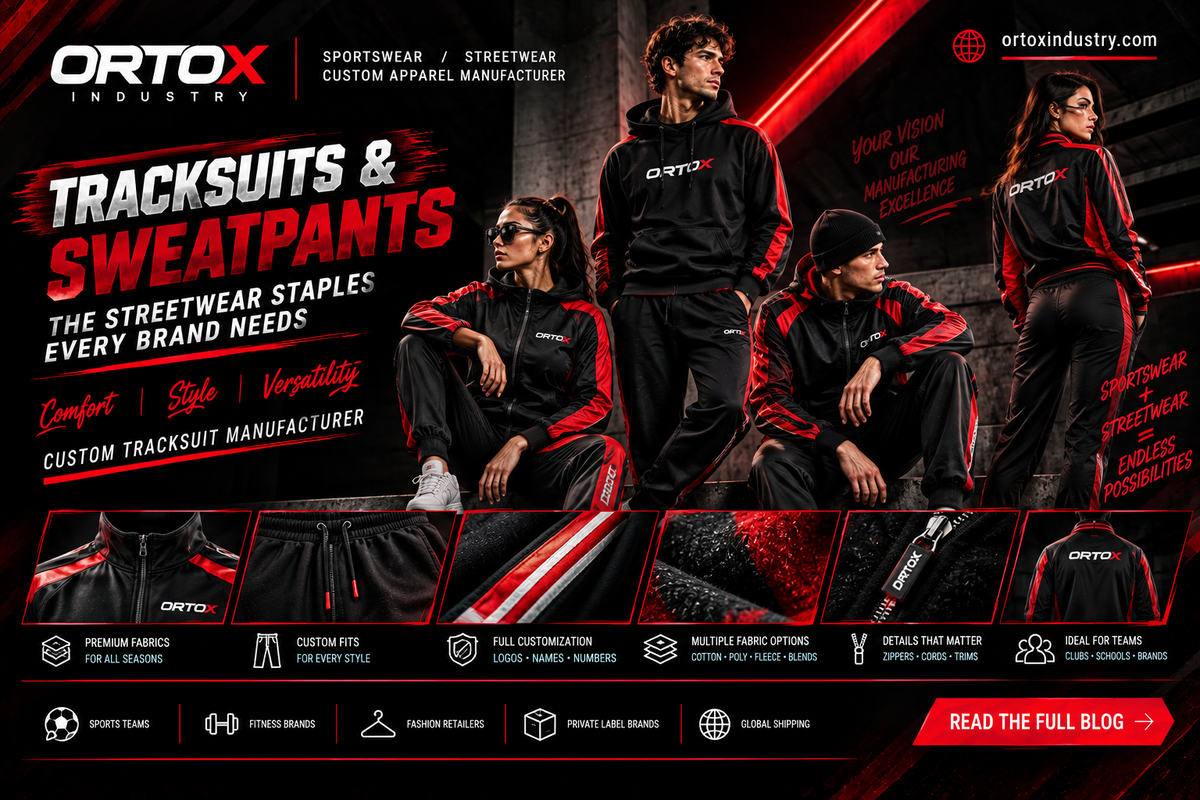
Tracksuits & Sweatpants: The Streetwear Staples Every Brand Needs
Primary Keyword: custom tracksuit manufacturer
Secondary SEO Keywords
- custom tracksuit manufacturer
- custom tracksuits
- private label tracksuits
- tracksuit manufacturer
- tracksuit clothing manufacturer
- custom sportswear manufacturer
- sportswear manufacturer
- sportswear and streetwear
- streetwear manufacturer
- custom streetwear manufacturer
- private label sportswear
- private label clothing manufacturer
- custom clothing manufacturer
- custom apparel manufacturer
- wholesale tracksuits
- wholesale sweatpants
- custom sweatpants manufacturer
- private label sweatpants
- custom joggers manufacturer
- athletic apparel manufacturer
- OEM sportswear manufacturer
- OEM clothing manufacturer
- custom teamwear
- custom athletic wear
- custom activewear manufacturer
- matching tracksuits
- streetwear tracksuits
- oversized sweatpants
- heavyweight sweatpants
- custom sportswear
- custom fashion wear
Suggested SEO Title:
Tracksuits & Sweatpants: The Streetwear Staples Every Brand Needs
Suggested Meta Description:
Discover why tracksuits and sweatpants are essential streetwear staples. Learn about fabrics, fits, customization, private label production and choosing a custom tracksuit manufacturer.
Suggested URL:https://ortoxindustry.com/tracksuits-sweatpants-streetwear-staples/
Introduction: Why Tracksuits and Sweatpants Matter in Modern Streetwear
Streetwear has changed dramatically over the last decade.
What was once strongly associated with underground urban culture, music, skateboarding and youth fashion has developed into a broad apparel category that overlaps with sportswear, athleisure and everyday lifestyle clothing.
Consumers increasingly want clothing that can move between different parts of their lives.
They may wear the same outfit while:
- Travelling
- Shopping
- Relaxing
- Going to the gym
- Meeting friends
- Running errands
- Attending casual events
- Creating social-media content
This shift has increased the importance of comfortable garments such as tracksuits and sweatpants.
Tracksuits provide a coordinated outfit while sweatpants provide comfort and styling flexibility. Together, they can form an important part of a modern streetwear collection.
Ortox Industry positions itself as a manufacturer and exporter of streetwear, fashion wear, fitness apparel and athletic clothing, including OEM and private-label production for international brands, wholesalers, distributors and retailers. (Ortox Industry)
For a brand developing its next collection, tracksuits and sweatpants can therefore serve as a bridge between sportswear and streetwear.
1. What Makes Tracksuits a Streetwear Staple?
A tracksuit traditionally consists of two coordinated pieces:
- A jacket or track top
- Matching pants
The concept is simple, but modern streetwear has transformed the tracksuit into a highly customizable fashion product.
A contemporary tracksuit can feature:
- Relaxed silhouettes
- Oversized fits
- Contrast panels
- Embroidery
- Screen printing
- Woven labels
- Custom graphics
- Logo branding
- Custom color combinations
- Technical fabrics
- Heavyweight materials
- Lightweight performance fabrics
This flexibility makes tracksuits suitable for both athletic and lifestyle collections.
A brand can design a tracksuit specifically for training or develop a fashion-focused version intended primarily for streetwear.
That is one reason the product remains relevant to brands looking for versatile apparel.
2. The Athleisure Crossover
One of the biggest developments in modern apparel is the crossover between athletic clothing and everyday fashion.
Sportswear is no longer restricted to sports.
Consumers may wear:
- Joggers with sneakers
- Tracksuit jackets with jeans
- Sweatpants with oversized T-shirts
- Athletic jackets with casual trousers
- Matching sets as everyday outfits
This crossover creates opportunities for brands operating between fashion and performance.
Ortox Industry’s own content describes the connection between streetwear and sportswear, noting that products such as tracksuits, joggers, hoodies and athletic tops can move beyond traditional sports settings into everyday fashion. (Ortox Industry)
For manufacturers, this means a tracksuit may need to satisfy two different expectations:
Performance + Lifestyle
The product should be comfortable enough for active use while visually appropriate for casual fashion.
3. Why Sweatpants Have Become Essential
Sweatpants have evolved considerably from their traditional role as basic athletic clothing.
Modern sweatpants can be designed around different fits and purposes.
Examples include:
- Classic straight-leg sweatpants
- Relaxed-fit sweatpants
- Oversized sweatpants
- Tapered joggers
- Heavyweight streetwear sweatpants
- Athletic joggers
- Cargo-style sweatpants
- Minimalist branded sweatpants
This variety allows brands to create different collections without abandoning the basic comfort associated with sweatpants.
A streetwear brand may choose a heavyweight oversized silhouette.
An athletic brand may prefer a lighter fabric with a tapered leg.
A lifestyle brand may use a relaxed fit designed for everyday wear.
4. Custom Tracksuits vs Generic Tracksuits
One of the most important decisions for an apparel brand is whether to purchase ready-made garments or develop custom products.
Generic products can be useful for businesses that need simple apparel quickly.
However, they can limit control over:
- Fit
- Fabric
- Colors
- Construction
- Branding
- Labels
- Graphics
- Packaging
Working with a custom tracksuit manufacturer can provide more control over these elements.
Instead of adapting your brand to an existing product, you can develop the product around your brand.
For example, a streetwear brand could specify:
- Oversized fit
- Heavyweight fabric
- Custom black-and-red colorway
- Embroidered chest logo
- Custom zipper
- Woven labels
- Custom drawcord
- Branded packaging
The finished tracksuit can then become part of the brand’s own identity.
5. Fabric Selection for Tracksuits
Fabric selection is one of the most important parts of tracksuit manufacturing.
The correct fabric depends on the intended purpose of the garment.
A lightweight athletic tracksuit may require a different material from a heavyweight streetwear tracksuit.
Important factors include:
Fabric Weight
Fabric weight affects the garment’s:
- Feel
- Structure
- Warmth
- Drape
- Appearance
For streetwear, heavier fabrics can create a more substantial silhouette.
For athletic use, lighter materials may provide easier movement and layering.
Fabric Composition
Common apparel materials can include:
- Cotton
- Polyester
- Cotton-polyester blends
- Nylon
- Fleece
- Jersey
- Performance blends
Each material has different characteristics.
Stretch
Some tracksuits require additional flexibility, particularly when designed for athletic movement.
Breathability
Breathability can become important when the product is intended for physical activity.
Durability
A tracksuit may be washed frequently, so the fabric and construction should be selected with the intended usage in mind.
6. Choosing the Right Fabric for Sweatpants
Sweatpants are particularly dependent on fabric selection because the material contributes significantly to comfort.
A brand may choose:
Lightweight fabric
For warmer environments and relaxed everyday wear.
Midweight fabric
For general-purpose sweatpants.
Heavyweight fabric
For structured streetwear silhouettes and colder conditions.
Fleece-backed fabric
For additional warmth and softness.
The right choice depends on the target market and product positioning.
A private label sweatpants collection can therefore be developed around the specific characteristics a brand wants its customers to experience.
7. Understanding GSM in Tracksuit Manufacturing
GSM means grams per square metre.
It is commonly used to describe fabric weight.
For clothing brands, GSM can be useful when communicating fabric requirements to a manufacturer.
However, GSM should not be treated as the only measurement of quality.
Two fabrics with similar GSM can feel different because of differences in:
- Fiber composition
- Construction
- Finishing
- Weave or knit
- Processing
- Surface treatment
Therefore, brands should evaluate actual samples rather than selecting fabric purely based on a GSM number.
8. Streetwear Fit Trends
Fit has a major influence on how a tracksuit or sweatpant collection looks.
Streetwear collections commonly experiment with silhouettes rather than relying on traditional athletic fits.
Possible approaches include:
Relaxed Fit
Provides additional room while maintaining a relatively conventional silhouette.
Oversized Fit
Creates a more exaggerated streetwear appearance.
Tapered Fit
Provides more room around the upper leg while narrowing toward the ankle.
Straight-Leg Fit
Maintains a consistent leg width for a classic appearance.
Boxy Track Jacket
A shorter, wider jacket silhouette can create a contemporary streetwear look.
The correct fit depends on the brand identity.
9. Matching Tracksuits and Coordinated Sets
One of the major advantages of tracksuits is that they naturally create a matching set.
A coordinated outfit can include:
- Track jacket
- Track pants
- T-shirt
- Hoodie
- Cap
- Sneakers
Brands can therefore build complete collections around one visual concept.
For example:
Black + Red Collection
- Black track jacket
- Red embroidered logo
- Black track pants
- Red side piping
- Black heavyweight T-shirt
- Red branding details
This can create a consistent visual identity across the collection.
10. Custom Branding Options
Branding is one of the most important parts of private-label apparel.
A manufacturer may offer several decoration methods depending on the garment.
Embroidery
Embroidery can provide a premium appearance.
It can work well for:
- Small chest logos
- Sleeve logos
- Initials
- Brand names
Screen Printing
Screen printing can be useful for larger graphics.
Heat Transfer
Heat-transfer techniques can provide detailed graphics depending on the application.
Woven Labels
Woven labels can be used for:
- Brand identity
- Size information
- Product branding
Hang Tags
Hang tags provide another opportunity for brand communication.
Custom Packaging
Brands can also develop packaging around the overall identity of the collection.
11. Private Label Tracksuit Manufacturing
A private label tracksuit manufacturer produces garments that are sold under the customer’s own brand.
Instead of the manufacturer’s brand appearing on the product, the garment can be developed around the client’s branding requirements.
Possible private-label elements include:
- Neck labels
- Woven labels
- Care labels
- Hang tags
- Packaging
- Embroidery
- Printed graphics
- Custom colors
- Product specifications
This can be particularly useful for ecommerce brands and fashion companies that want to develop their own product identity.
12. Tracksuits for Sportswear Brands
Tracksuits remain useful in sportswear because they can serve several purposes.
Teams can use them for:
- Warm-ups
- Travel
- Training
- Team presentations
- Pre-game activities
- Post-game activities
A sportswear brand can also sell tracksuits directly as lifestyle products.
This gives manufacturers an opportunity to develop products that combine teamwear functionality with contemporary styling.
13. Tracksuits for Streetwear Brands
Streetwear brands may approach tracksuit manufacturing differently.
The focus may be more strongly placed on:
- Silhouette
- Branding
- Graphics
- Fabric weight
- Color combinations
- Details
- Limited collections
For example, a streetwear collection might include:
Oversized Track Jacket + Wide-Leg Track Pants
rather than a traditional fitted athletic tracksuit.
This demonstrates how the same basic product category can serve very different markets.
14. Sweatpants as Everyday Fashion
Modern sweatpants are not necessarily limited to athletic activities.
They can be styled with:
- Oversized T-shirts
- Hoodies
- Sweatshirts
- Jackets
- Sneakers
- Casual accessories
This makes sweatpants a strong candidate for lifestyle collections.
A brand can also create seasonal variations using different fabric weights and color palettes.
15. Building a Complete Streetwear Collection
Tracksuits and sweatpants become even more useful when they are integrated into a larger collection.
A brand might develop:
Tops
- Oversized T-shirts
- Graphic T-shirts
- Hoodies
- Sweatshirts
Bottoms
- Sweatpants
- Joggers
- Cargo pants
- Shorts
Outerwear
- Track jackets
- Varsity jackets
- Bomber jackets
Matching Sets
- Tracksuits
- Hoodie + sweatpants
- T-shirt + shorts
This creates multiple opportunities for customers to mix and match products.
Ortox Industry’s current site positions its manufacturing around streetwear, fitness apparel, athletic clothing and custom apparel, making this broader product approach consistent with its stated manufacturing focus. (Ortox Industry)
16. Custom Tracksuits for Private Label Brands
Private-label brands can use tracksuits as:
- Core products
- Seasonal products
- Limited drops
- Matching sets
- Promotional collections
- Team-inspired collections
The advantage is that the brand can establish its own visual language.
For example, the same logo can appear consistently across:
- Tracksuit
- Hoodie
- Sweatpants
- T-shirt
- Jacket
- Shorts
This consistency can make the collection look more professionally developed.
17. Wholesale Tracksuits for Distributors
Distributors and wholesalers often need products that can serve multiple customers.
Tracksuits are versatile enough to be used by:
- Clothing retailers
- Sports stores
- Fashion boutiques
- Online sellers
- Sports organizations
- Clubs
- Academies
A distributor can also request different colors, sizes and branding options depending on the target customer.
For this reason, wholesale tracksuits can form part of a broader sportswear or streetwear wholesale collection.
18. Custom Sweatpants for Clothing Brands
A clothing brand may want sweatpants that match its exact product identity.
Customization can include:
- Fit
- Length
- Waistband
- Cuffs
- Pocket design
- Fabric
- Color
- Logo
- Embroidery
- Printing
- Labels
A custom sweatpants manufacturer can work from specifications, reference samples, artwork or technical documentation depending on the production process.
19. The Importance of Waistband Construction
Sweatpants depend heavily on waistband comfort.
Common design elements include:
- Elastic waistband
- Drawcord
- Flat drawcord
- Round drawcord
- Branded drawcord
- Custom metal tips
The waistband can also influence the overall appearance.
A streetwear brand may prefer a wider waistband for a premium look.
An athletic product may prioritize secure fit and movement.
20. Pockets and Functional Details
Pockets are another important design consideration.
Possible configurations include:
- Side pockets
- Back pockets
- Zipper pockets
- Cargo pockets
- Hidden pockets
The choice depends on the intended use.
For everyday streetwear, large practical pockets can contribute to the design.
For athletic products, secure zippered pockets may be useful for carrying small personal items.
21. Zippers and Hardware
Tracksuit jackets often include zippers.
Hardware can influence both appearance and functionality.
Consider:
- Zipper quality
- Zipper size
- Puller design
- Color
- Branding
- Construction
A small hardware detail can significantly change the appearance of a garment.
For premium streetwear, branded or custom hardware may become part of the overall product identity.
22. Color Strategy for Tracksuits
Color can define a tracksuit collection.
Classic colors include:
- Black
- White
- Grey
- Navy
More fashion-oriented collections may introduce:
- Red
- Green
- Blue
- Brown
- Cream
- Pastels
- Two-tone combinations
Brands can also use contrast strategically.
For example:
Black tracksuit + white logo + red piping
creates a very different appearance from:
Cream tracksuit + tonal embroidery
Color selection should match the overall brand identity.
23. Why Black Tracksuits Remain Versatile
Black is particularly useful for streetwear because it works with many other garments.
A black tracksuit can be combined with:
- White sneakers
- Graphic T-shirts
- Hoodies
- Jackets
- Caps
It can also provide a strong background for embroidery and printed logos.
For brands developing a first collection, neutral colors can provide flexibility across multiple styling options.
24. The Role of Red in Sportswear and Streetwear
Red can be used as an accent color rather than covering the entire garment.
Examples include:
- Red logo
- Red piping
- Red zipper
- Red sleeve stripe
- Red embroidery
- Red drawcord
This approach can create a recognizable visual signature.
25. Manufacturing Quality and Construction
A good design still requires reliable construction.
Important areas include:
- Seam consistency
- Stitch density
- Reinforcement
- Waistband attachment
- Cuff construction
- Pocket attachment
- Zipper installation
- Label placement
For sweatpants, stress areas can include:
- Crotch
- Pockets
- Waistband
- Side seams
- Cuffs
For tracksuit jackets, attention may be needed around:
- Zippers
- Shoulders
- Sleeves
- Pockets
- Collar
- Hem
Quality control should consider the complete garment rather than only the visual appearance.
26. Sampling Before Bulk Production
Sampling is one of the most important stages of custom apparel manufacturing.
Before approving a bulk order, brands should review the sample for:
- Fit
- Measurements
- Fabric
- Color
- Branding
- Stitching
- Hardware
- Construction
- Overall appearance
If adjustments are needed, they can be discussed before bulk production.
This is especially important when developing a completely new tracksuit silhouette.
27. Tech Packs for Custom Tracksuits
A tech pack can help communicate specifications to a manufacturer.
It may include:
- Technical drawings
- Measurements
- Fabric information
- Color references
- Stitching details
- Logo placement
- Label placement
- Hardware information
- Size grading
A detailed tech pack can reduce misunderstandings during product development.
However, the exact information required depends on the product and manufacturing arrangement.
28. From Concept to Finished Tracksuit
A typical custom apparel development workflow can be organized into several stages.
Stage 1: Concept
Define the product and target customer.
Stage 2: Design
Create sketches, references or technical specifications.
Stage 3: Material Selection
Select fabric and trims.
Stage 4: Sampling
Produce and evaluate a sample.
Stage 5: Revisions
Adjust measurements, fit or construction where required.
Stage 6: Approval
Finalize specifications.
Stage 7: Bulk Production
Manufacture the approved product.
Stage 8: Quality Control
Inspect finished garments.
Stage 9: Packing
Prepare products for shipment.
Stage 10: Shipping
Send the finished collection to the customer.
This structured process can help brands manage custom apparel projects more effectively.
29. Tracksuits and the Future of Sportswear + Streetwear
The boundary between sportswear and streetwear continues to create opportunities for apparel brands.
A tracksuit can be:
- Athletic
- Casual
- Fashion-focused
- Travel-friendly
- Team-oriented
- Lifestyle-oriented
That versatility makes it suitable for multiple collections.
The broader trend toward comfortable, versatile clothing also supports the continued relevance of products such as tracksuits, joggers and sweatpants. Ortox Industry’s own recent editorial content similarly describes the convergence of sportswear, streetwear and everyday lifestyle fashion. (Ortox Industry)
30. How Brands Can Build a Tracksuit Collection
Instead of producing one tracksuit, brands can develop a collection with different product tiers.
Entry Collection
- Basic tracksuit
- Standard colors
- Simple branding
Core Collection
- Custom fabric
- Custom colors
- Embroidery
- Improved fit
Premium Collection
- Heavyweight materials
- Custom hardware
- Detailed embroidery
- Premium labels
- Branded packaging
This allows a brand to target different customer segments without completely changing its identity.
31. Tracksuit Drops and Limited Collections
Streetwear brands frequently build excitement around limited product releases.
A tracksuit can be used as a central product for a limited collection.
For example:
Winter Drop
- Black heavyweight tracksuit
- Matching hoodie
- Sweatpants
- Varsity jacket
Or:
Summer Athletic Drop
- Lightweight track jacket
- Lightweight pants
- Performance T-shirt
- Shorts
The manufacturing strategy should be planned around the brand’s expected demand and inventory requirements.
32. How Private Label Manufacturing Helps Brand Identity
Private-label production allows the brand to maintain control over the customer-facing product.
The manufacturer’s role is primarily to produce according to agreed specifications.
The brand controls elements such as:
- Product identity
- Logo
- Labels
- Colors
- Fit
- Packaging
- Collection concept
This can make private-label manufacturing attractive to ecommerce and fashion businesses.
Ortox Industry states that its services include customized OEM and private-label collections for brands worldwide. (Ortox Industry)
33. Choosing a Custom Tracksuit Manufacturer
Before selecting a manufacturer, brands should consider several practical factors.
Product Experience
Does the manufacturer understand tracksuits and sportswear?
Customization
Can they work with your designs and branding?
Sampling
Can you review a sample before production?
Fabric Options
Can they provide materials suitable for your product?
Quality Control
What inspection process is used?
Communication
Can specifications be discussed clearly?
Production Capacity
Can the factory handle your required volume?
Packaging
Can your brand’s packaging requirements be supported?
Shipping
Can the finished products be exported to your target market?
These questions can help a brand evaluate manufacturing partners objectively.
34. Why Direct Factory Manufacturing Can Matter
Working directly with a manufacturer can provide a more direct communication path.
Instead of communicating through several intermediaries, the brand can discuss:
- Product specifications
- Samples
- Fabric
- Branding
- Production
- Packaging
- Shipping
directly with the production partner.
Ortox Industry presents itself as offering factory-direct pricing, OEM/private-label production and worldwide shipping from its Sialkot, Pakistan operation. (Ortox Industry)
35. Custom Tracksuits for International Markets
Tracksuits can be sold in different markets because the basic product is globally recognizable.
However, brands should consider local preferences such as:
- Climate
- Sizing
- Fit
- Color preferences
- Cultural styling
- Seasonal demand
A manufacturer should therefore understand the brand’s target market before finalizing specifications.
36. Tracksuits for Sports Teams and Academies
Beyond fashion brands, tracksuits are highly relevant to teams.
They can be used for:
- Football teams
- Basketball teams
- Rugby teams
- Cricket teams
- Athletics teams
- Academies
- Schools
- Colleges
- Sports clubs
Team tracksuits can feature:
- Club logo
- Player names
- Numbers
- Sponsor logos
- Team colors
This makes custom teamwear another important application of tracksuit manufacturing.
37. Tracksuits for Fitness Brands
Fitness brands can use tracksuits as lifestyle extensions of their core product range.
For example, a gymwear company could offer:
- Performance shirts
- Shorts
- Joggers
- Hoodies
- Tracksuits
- Warm-up jackets
This allows customers to build complete outfits around one brand.
38. Sweatpants for Ecommerce Collections
Sweatpants can also work well as ecommerce products because they are easy to combine with other garments.
An online collection might include:
Product 1: Oversized T-shirt
Product 2: Hoodie
Product 3: Sweatpants
Product 4: Track jacket
Product 5: Matching tracksuit
The same customer can potentially purchase multiple products from the collection.
39. SEO Opportunity for Custom Tracksuit Manufacturers
For manufacturers, the keyword custom tracksuit manufacturer can connect several search intents.
Potential related searches include:
- Custom tracksuit manufacturer
- Tracksuit manufacturer
- Private label tracksuits
- Custom sportswear manufacturer
- Wholesale tracksuits
- Custom teamwear
- Custom athletic wear
- Sportswear manufacturer
- Streetwear manufacturer
- Custom clothing manufacturer
Rather than repeatedly forcing the exact keyword into every paragraph, these related terms can be distributed naturally throughout headings, body copy, image alt text and supporting content.
This creates a more natural topical structure.
40. Building Topical Authority Around Sportswear and Streetwear
If your broader SEO goal is to rank Ortox Industry around sportswear and streetwear, one article should not work alone.
You can build supporting articles around:
- Custom hoodies
- Varsity jackets
- Performance shirts
- Warm-up jackets
- Basketball uniforms
- Soccer jerseys
- Rugby uniforms
- Sweatpants
- Tracksuits
- Streetwear T-shirts
- Private-label clothing
- OEM apparel
- Sportswear manufacturing
- Streetwear manufacturing
Then internally link these articles to relevant product and manufacturing pages.
This creates a connected content cluster around your core manufacturing services.
Ortox already publishes content connecting sportswear, streetwear and athletic fashion, so this tracksuit article can fit naturally within that broader topic structure. (Ortox Industry)
41. Suggested Internal Linking Strategy for Ortox Industry
For this article, consider linking naturally to:
Homepage:
Ortox Industry – Custom Clothing Manufacturer
About/Company:
About Ortox Industry
You can use contextual anchor text such as:
- custom clothing manufacturer
- sportswear manufacturer
- streetwear manufacturer
- private label apparel manufacturer
- custom sportswear manufacturer
Avoid adding the same exact anchor text repeatedly.
42. What Brands Should Provide to a Manufacturer
To make product development smoother, brands should prepare as much information as possible.
Useful materials can include:
- Logo files
- Artwork
- Product sketches
- Reference photographs
- Measurements
- Tech packs
- Fabric preferences
- Color references
- Quantity requirements
- Size breakdown
- Branding requirements
- Packaging instructions
The clearer the information, the easier it becomes to discuss the product accurately.
43. Common Mistakes When Developing Tracksuits
Mistake 1: Choosing Fabric Only by Price
The cheapest fabric may not provide the desired appearance or performance.
Mistake 2: Skipping Sampling
A design may look good digitally but require changes when physically produced.
Mistake 3: Ignoring Fit
Tracksuits are highly dependent on silhouette.
Mistake 4: Poor Branding Placement
Logos should be positioned intentionally.
Mistake 5: Ignoring Hardware
Zippers, cords and trims contribute to the overall product.
Mistake 6: Ordering Before Final Approval
Bulk production should follow confirmation of important specifications.
44. Why Tracksuits Can Be a Strong Product Category
Tracksuits combine several characteristics that modern apparel brands often seek:
Comfort
They are naturally associated with relaxed clothing.
Versatility
They can be worn in athletic and casual environments.
Branding Potential
Both pieces provide space for logos and graphics.
Collection Potential
They can be combined with T-shirts, hoodies and jackets.
Customization
Fabric, fit, color and branding can all be adjusted.
Sportswear Connection
They naturally fit into athletic collections.
Streetwear Connection
Modern silhouettes allow them to work within fashion collections.
This combination makes tracksuits particularly relevant to brands operating between sportswear and streetwear.
45. Why Sweatpants Belong in Every Modern Streetwear Collection
Sweatpants have become more than basic casual clothing.
They can serve as:
- Standalone products
- Matching-set bottoms
- Lounge products
- Athletic products
- Streetwear products
- Travel clothing
- Seasonal products
A well-designed pair can become a foundation for multiple outfits.
For brands, this makes sweatpants a flexible product around which other garments can be developed.
46. The Role of Quality Control
Quality control should be considered throughout manufacturing rather than only at the end.
Areas that can be checked include:
- Measurements
- Stitching
- Fabric
- Color
- Logo placement
- Embroidery
- Printing
- Zippers
- Pockets
- Waistbands
- Cuffs
- Labels
- Packaging
A consistent quality-control process can help reduce avoidable production issues.
47. Ortox Industry and Custom Apparel Manufacturing
Ortox Industry describes its manufacturing operation as serving wholesalers, distributors, retailers and private-label brands with streetwear, fashion wear, fitness apparel and athletic clothing. The company also highlights custom product development, material sourcing, manufacturing, quality control and export support. (Ortox Industry)
That positioning can be incorporated naturally into a tracksuit-focused content strategy.
For brands looking for a custom tracksuit manufacturer, the important conversation should begin with the product requirements:
- What fabric?
- What fit?
- What colors?
- What branding?
- What quantity?
- What market?
- What packaging?
- What performance requirements?
Once those requirements are established, the manufacturer can work toward sampling and production.
48. How to Create a Strong Tracksuit Product Brief
A simple product brief could include:
Product: Custom Tracksuit
Fit: Relaxed/Oversized
Fabric: Selected according to intended use
Color: Black
Accent: Red
Branding: Embroidered chest logo
Jacket: Full zip
Pants: Elastic waistband + drawcord
Pockets: Two side pockets
Labels: Custom woven neck/waist labels
Packaging: Custom branded packaging
Target: Streetwear / sportswear
This type of brief gives a manufacturer a clearer starting point.
49. Combining Tracksuits With Other Streetwear Products
A tracksuit should not necessarily be treated as an isolated product.
It can become the center of a collection.
For example:
Collection A — Urban Essentials
- Oversized T-shirt
- Hoodie
- Sweatpants
- Tracksuit
Collection B — Athletic Lifestyle
- Performance shirt
- Track jacket
- Track pants
- Shorts
Collection C — Premium Streetwear
- Heavyweight hoodie
- Oversized sweatpants
- Varsity jacket
- Premium tracksuit
This approach can help brands create a coherent product ecosystem.
50. Final Thoughts: Tracksuits and Sweatpants as Core Streetwear Products
Tracksuits and sweatpants have moved far beyond their traditional athletic origins.
They now sit at the intersection of:
Sportswear + Streetwear + Athleisure + Lifestyle Fashion
For brands, that intersection creates numerous product-development possibilities.
A tracksuit can be designed for athletes, developed for streetwear customers, or positioned as a premium lifestyle product.
Sweatpants can be relaxed, oversized, athletic, heavyweight or minimalist.
The key is matching the:
Fabric + Fit + Construction + Branding + Target Customer
When these elements are planned together, the result can be a product that fits naturally into a broader apparel collection.
For brands looking for a manufacturing partner, Ortox Industry’s stated capabilities include custom product development, OEM and private-label production, sportswear, streetwear and athletic apparel manufacturing. (Ortox Industry)
If your goal is to build a sportswear and streetwear brand, tracksuits and sweatpants can be developed alongside hoodies, T-shirts, jackets, performance shirts and other complementary products.
Explore Ortox Industry:
ortoxindustry.com – Custom OEM & Private Label Apparel Manufacturing
SEO Keyword Placement Plan
For the final published version, I recommend keeping the keyword strategy natural:
| Keyword | Suggested use |
|---|---|
| custom tracksuit manufacturer | Primary keyword — title, introduction, H2, conclusion |
| tracksuit manufacturer | Supporting |
| custom tracksuits | Supporting |
| private label tracksuits | Supporting |
| custom sweatpants manufacturer | Supporting |
| private label sweatpants | Supporting |
| sportswear manufacturer | Supporting |
| custom sportswear manufacturer | Supporting |
| streetwear manufacturer | Supporting |
| custom streetwear manufacturer | Supporting |
| private label sportswear | Supporting |
| custom clothing manufacturer | Supporting |
| custom apparel manufacturer | Supporting |
| sportswear and streetwear | Core topical phrase |
| wholesale tracksuits | Commercial supporting keyword |
| custom teamwear | Sportswear supporting keyword |
| OEM sportswear manufacturer | Manufacturing supporting keyword |
Important SEO point: don’t stuff all these phrases repeatedly. Google can understand related terminology, so natural coverage of tracksuits, sweatpants, joggers, streetwear, sportswear, private label, OEM, custom apparel, fabric, fit and manufacturing is more useful than repeating the same keyword excessively.
This article also fits well with Ortox’s existing content about the relationship between streetwear, sportswear and athletic fashion. (Ortox Industry)